


There is a company in India that has built one of the largest hyperscale data centres in the country, is scaling toward 10,000 MW of capacity by 2030, has 22 GW of renewable energy capacity committed to power its AI infrastructure ambitions, just raised $150 million at a ₹37,000 crore valuation — and most people outside the technology and enterprise infrastructure space have never heard its name.
Yotta Data Services, the data centre and cloud infrastructure arm of the Hiranandani Group, closed a $150 million Series A funding round led by global sovereign and institutional investors, with the transaction implying a post-money enterprise value of approximately ₹37,000 crore. This is the company's first institutional equity fundraise after operating for over half a decade with Hiranandani Group's own capital.
Yotta is not a startup in the conventional sense. It is the technology infrastructure arm of one of India's largest and most established real estate and industrial groups — the Hiranandani Group, which has been building commercial and residential projects for four decades and which deployed its balance sheet into data centre infrastructure in 2019, years before the AI-driven hyperscale demand wave made that investment look prescient.
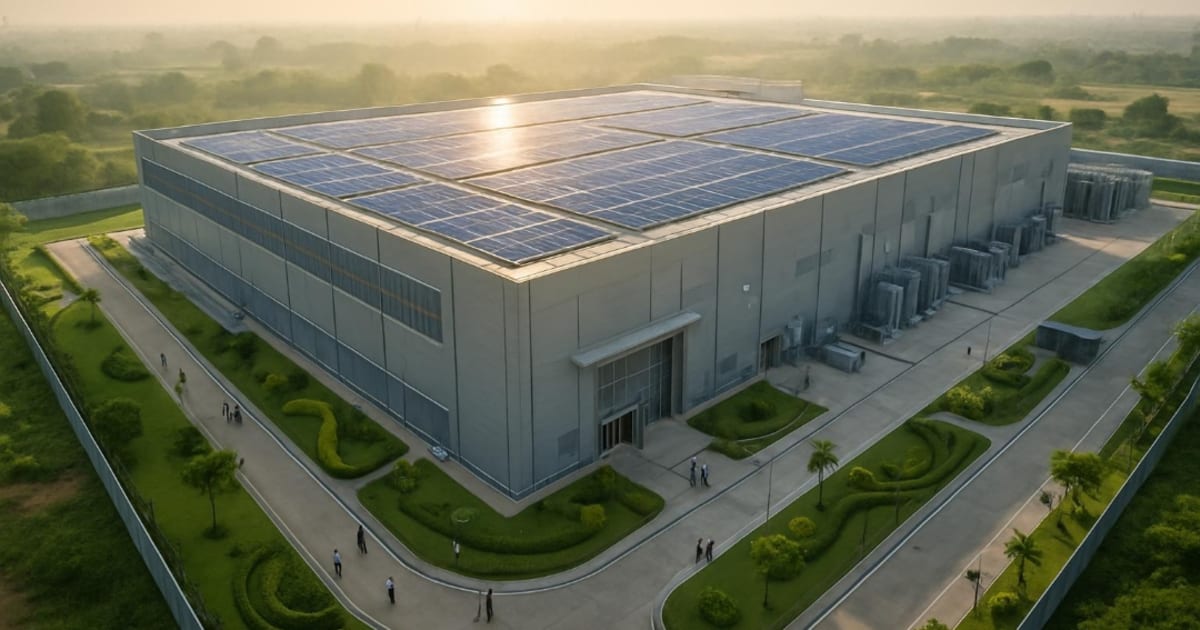
The company operates from three primary campuses: Navi Mumbai (NM1 — India's largest hyperscale data centre), Greater Noida (NN1), and Pune — with expansion phases underway across all three. The Navi Mumbai campus alone has emerged as a flagship facility for enterprise and hyperscaler clients, built with the redundancy, cooling, and power infrastructure that tier-1 global cloud operators require.
Current operational capacity sits at approximately 400 MW across its facilities. The roadmap is considerably more ambitious: Yotta is targeting 10,000 MW of total data centre capacity by 2030 — a 25x increase from current levels that, if achieved, would make it one of the top five data centre operators in Asia by capacity.
To power that ambition, the company has committed 22 GW of renewable energy — solar, wind, and hybrid storage — spread across Rajasthan and Karnataka. This isn't simply a sustainability commitment; it's a fundamental operational necessity. At 10,000 MW of data centre capacity, Yotta's power consumption would be equivalent to the entire residential electricity demand of a mid-sized Indian city. Captive renewable generation is the only pathway to making those economics work without being permanently hostage to state electricity board pricing and grid instability.
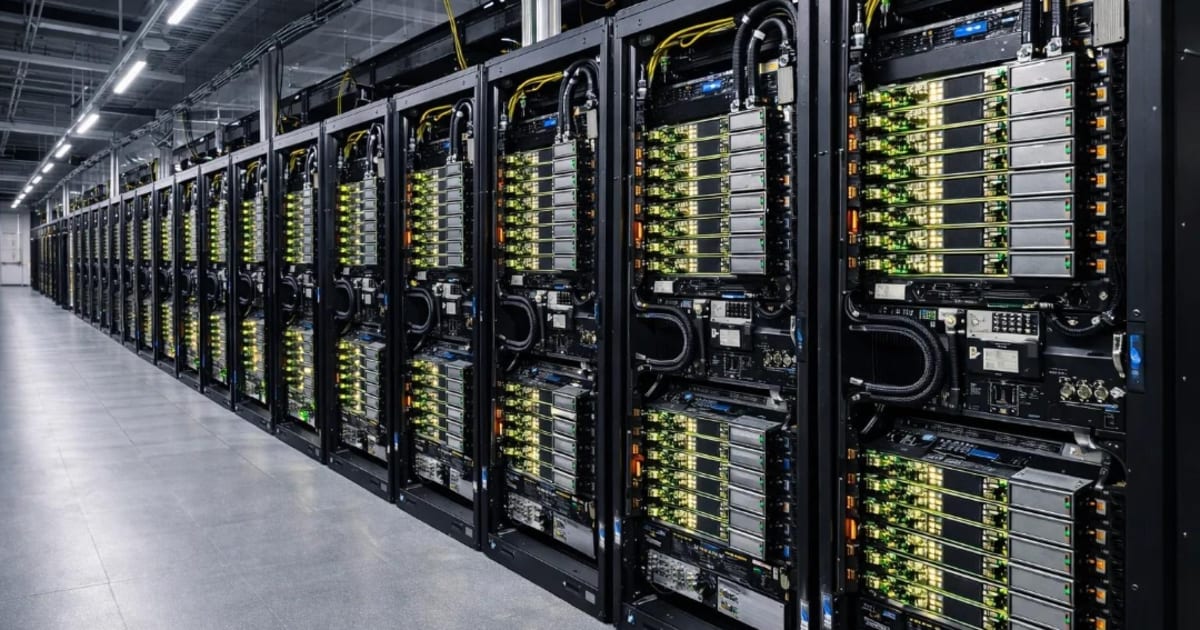
The fresh capital will primarily fund three things simultaneously. First, the acceleration of GPU cluster build-out for AI workloads. Yotta has been deploying NVIDIA H100 and upcoming Blackwell-generation GPUs into dedicated AI compute infrastructure, and the fundraise accelerates both the procurement and the facility build-out needed to house higher-density GPU racks than conventional enterprise data centres are designed for.
Second, geographic expansion. Beyond the three existing campuses, Yotta is evaluating additional site development in Chennai, Hyderabad, and Bengaluru — cities where enterprise and GCC demand for colocation and AI compute infrastructure has been growing fastest, but where supply remains constrained.
Third, the buildout of Yotta's cloud and AI platform layer — moving beyond pure infrastructure colocation toward managed AI services, cloud compute, and potentially sovereign cloud capabilities for enterprise and government clients who cannot place their workloads on foreign-owned cloud platforms for compliance reasons.
The investment thesis backing Yotta's valuation is straightforward in its broad strokes: India's AI infrastructure needs are growing faster than existing supply can accommodate, and the companies that own the real estate, the power infrastructure, and the cooling systems needed to run GPU clusters will capture significant value from that imbalance.
India's data centre capacity stood at approximately 1.5 GW as of early 2026 and is projected to reach 5-8 GW by 2030, according to analyst estimates. A meaningful portion of that projected capacity exists on paper — announced by operators who have not yet broken ground or secured power connectivity. Yotta's advantage is that it already has three operational campuses, existing client relationships, power infrastructure in place, and a balance sheet backed by one of India's most creditworthy real estate groups.
The hyperscaler customer base — the Amazons, Googles, and Microsofts of the world — are actively seeking Indian colocation partners that can meet their exacting technical standards for redundancy, uptime, and green energy sourcing. Yotta's renewable energy commitment and its established track record with enterprise clients across banking, financial services, media, and pharmaceuticals make it one of the few operators that can credibly compete for hyperscaler mandates at this stage.
The AI-specific demand layer is where the growth trajectory becomes genuinely exponential. A single AI GPU cluster consuming 10 MW of power generates more revenue per square foot than a conventional enterprise server room consuming the same power — because the compute density, and therefore the revenue per rack, is far higher for AI workloads than for traditional cloud compute. Operators who built their facilities for AI-density from the ground up, rather than retrofitting conventional data centres, have a structural advantage that compounds as customer demand shifts toward AI-first architectures.
Yotta competes across two distinct market segments — enterprise colocation and hyperscale/AI cloud infrastructure — with different competitors in each.
In enterprise colocation, the primary competitors are Nxtra Data (Airtel's data centre subsidiary, which has committed $1 billion to India expansion from FY27), CtrlS Datacenters (India's first Tier 4 certified data centre operator), and STT GDC India (a subsidiary of Singapore Technologies Telemedia). Each of these operators has established customer relationships and is expanding capacity in similar geographies.
In hyperscale and AI infrastructure, the competitors include the cloud giants themselves — AWS, Azure, and Google Cloud all have India regions and are expanding them — alongside pure-play AI infrastructure companies and the data centre arms of larger Indian conglomerates like Adani Enterprises and Reliance Industries, both of which have announced hyperscale ambitions of their own at significant scale.
What distinguishes Yotta in this field is the combination of operational credibility — it has been running facilities, not just announcing them — and the Hiranandani Group's unique ability to provide the land, the regulatory approvals, and the real estate infrastructure for large-scale campus development far faster than a typical startup could manage. Building a hyperscale data centre is as much a real estate and civil infrastructure project as it is a technology project, and the Hiranandani Group has been doing complex real estate development in India for forty years.
The ₹37,000 crore post-money valuation — approximately $4.4 billion — implies that investors are pricing Yotta at roughly 10x its projected annualised revenue run rate, a multiple consistent with high-growth infrastructure businesses in markets where the demand outlook is clear and the supply is constrained.
For context, listed Indian data centre companies trade at enterprise value to EBITDA multiples of 20-25x, and Nxtra Data's separate implied valuation within Airtel's group accounts was estimated by analysts at ₹25,000-30,000 crore before Yotta's raise established a new benchmark. The Yotta fundraise, in creating a more current market-based valuation data point for Indian data centre assets, is likely to accelerate the conversation around valuation for Nxtra's potential IPO and for other unlisted data centre operators evaluating capital raises.
An IPO is not yet on the immediate horizon for Yotta — the company has described the current fundraise as providing runway for the next phase of growth, with public markets a consideration for a later stage once the expanded capacity is generating stable, predictable revenue at scale. Given that several of the largest planned expansions are still 18-36 months from commissioning, an IPO timeline of 2027-2028 seems the more realistic window.
The $150 million, and the ₹37,000 crore valuation it implies, is the market's judgment that the Hiranandani Group's bet on AI infrastructure is one of the best-positioned private capital allocations in India's technology sector right now. Whether 10,000 MW by 2030 is achievable, and whether the renewable energy commitments translate into actual power delivery on the required timeline, are the execution questions that will determine whether that judgment looks prescient or overambitious in four years' time.

Nikunjj Jhawar is a Chartered Accountant (CA) and Chartered Financial Analyst (CFA) with nearly two decades of experience in the financial services industry. Having worked with global institutions such as HSBC and Credit Suisse in investment-related roles, he brings deep expertise in finance and markets. He is the Founder of mangopeoplenews.com, where he focuses on making complex topics in finance, markets and business accessible and relevant to everyday readers.

HCLTech Is No Longer Just an IT Services Company: Inside the AI, Data Centre, and Semiconductor Bets That Are Redefining India's Third-Largest IT Giant
14 Jul 2026

Global Pension Funds Have Trillions to Invest. Budget Told Them India Is Ready to Take It - Here's How REITs and InvITs Actually Work
7 Aug 2026

Everything You Need to Know About the Shiprocket IPO - The App Behind 17 Lakhs Deliveries Daily Is Going Public
6 Aug 2026

Will Your Daily Scans Stay Free? What the Finance Ministry’s New UPI Amendment Really Means
4 Aug 2026

Beyond Jet Engines: How Aequs Is Secretly Building India’s Next Consumer Goods Empire
1 Aug 2026

Plastic Rupee Notes Coming Soon: Why India Is Testing Polymer Banknotes and How They Work
29 Jul 2026

India's Small-Town Entrepreneurs Are Eyeing the World as E-Commerce Exports Gather Momentum
24 Jul 2026

India Makes 33 Times More Phones Than It Did 10 Years Ago — But Here Is the Uncomfortable Truth About "Made in India"
23 Jul 2026